
Winter 2026 Newsletter
Dear FRIENDS of For Future Generations, Ecuador,
Greetings! It is a cold winter here in NE Tennessee. Julie and I spent the first half of January in Ecuador. I (David) was participating in a medical brigade with Indiana State University (whose students raise funds to support one student scholarship each year). Julie came down with Lynn Woodhouse (a FFGE board member) and her husband, William Livingood, at the end of the medical brigade. They are long-time friends from Jacksonville, Florida. As you can see from Lynn’s description below, she has an incredible opportunity to see Guangaje, meet the people there, and have substantial conversations with many of our scholarship students, 3 of whom are highlighted in this newsletter. Thank you again for your interest in and support for the indigenous and vulnerable youth from Cotopaxi, who, as you can read below, have the opportunity to attend college and make a real difference in their world thanks to your financial support. THANKS AGAIN!
PS…If any of you would like to join us in Ecuador on future trips (I go 3x/year), please let me know.
David Wood, President, FFGE.
A summary of my visit to Guangaje and Latacunga, Ecuador with For Future Generations, Ecuador (FFGE)
Lynn Woodhouse, FFGE Board Member
Pictured: Julie Wood, Lynn, Fernando Ortega, Lynn’s husband Bill Livingood, Rodrigo Ilaquiche
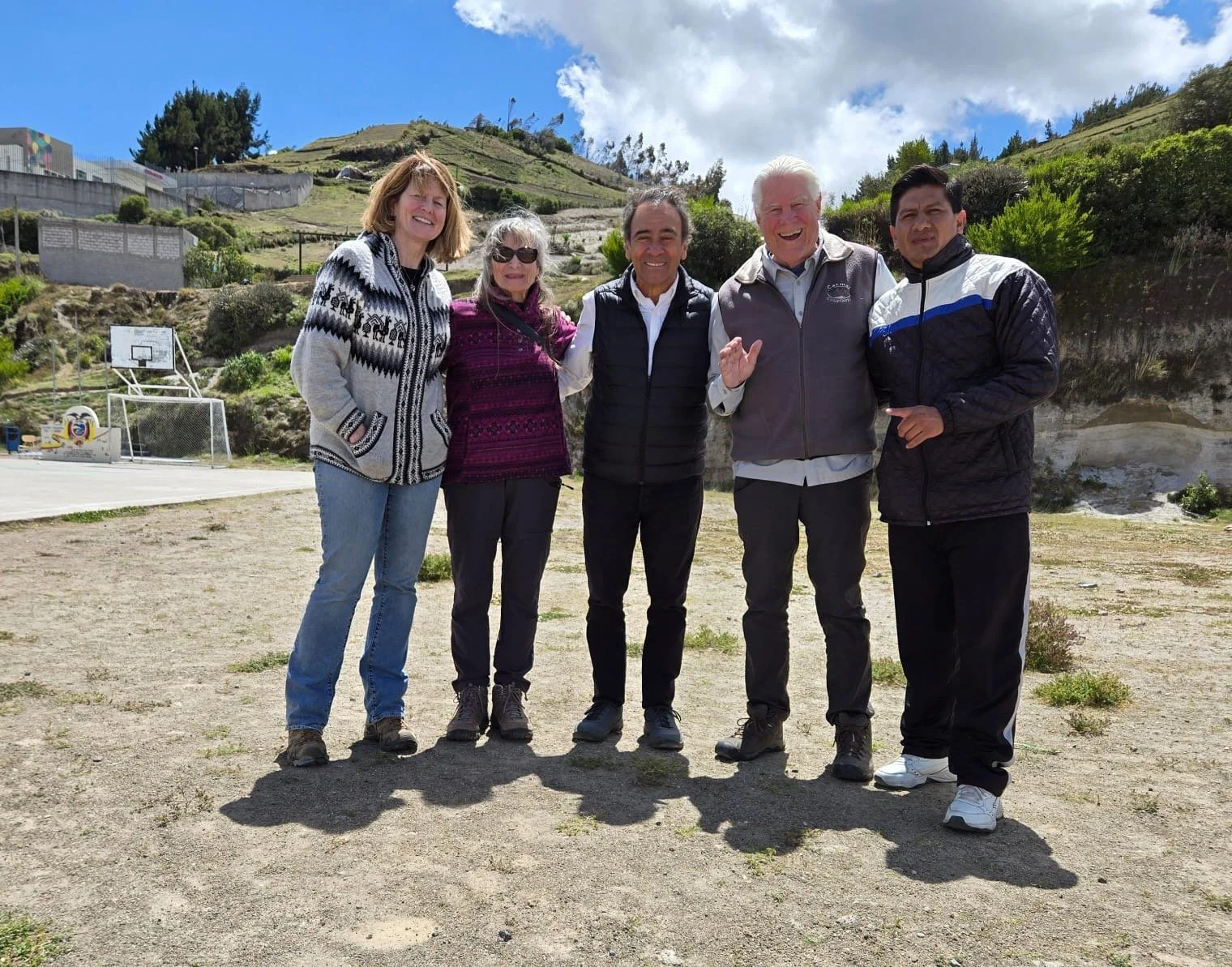
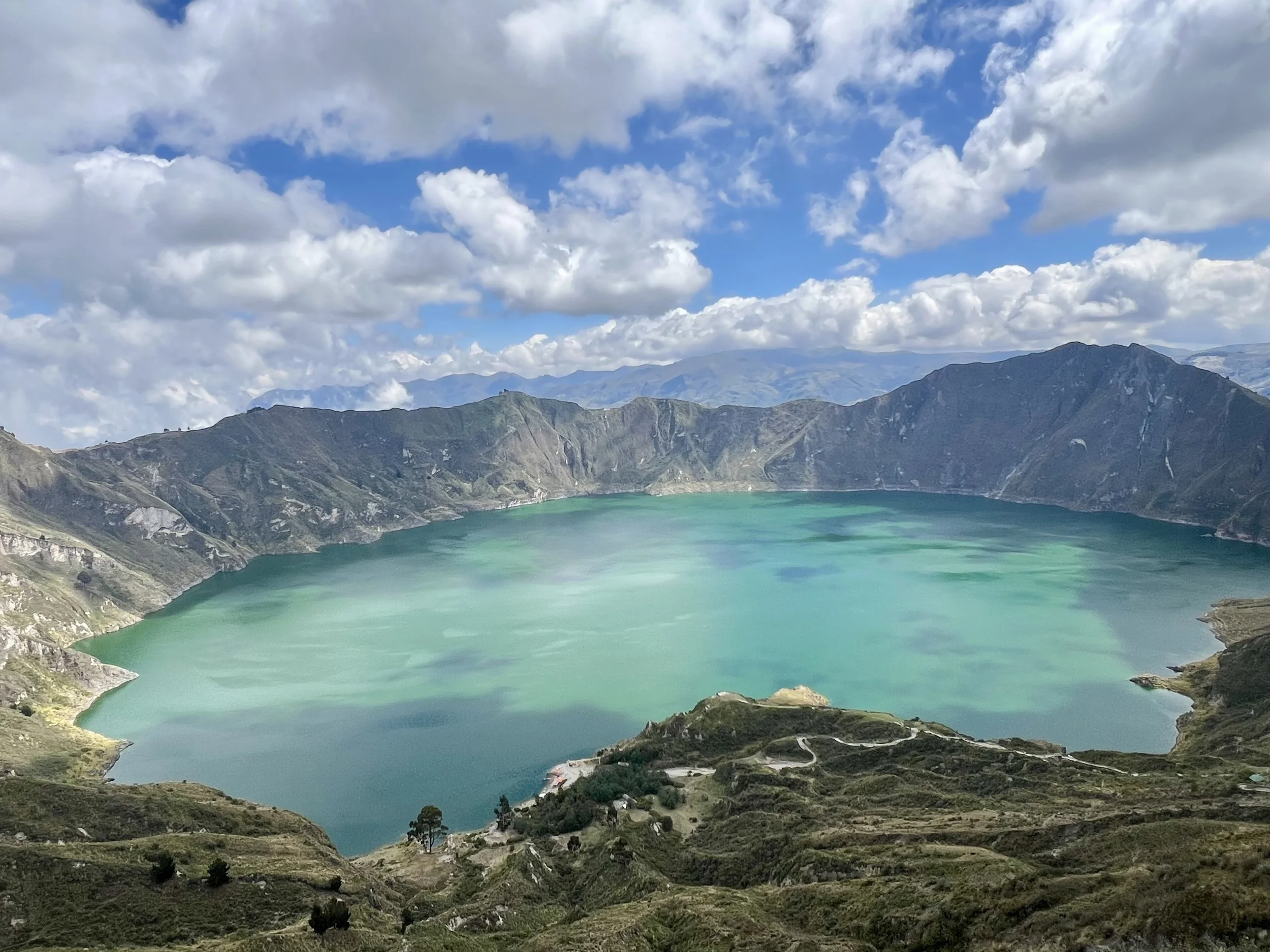
We arrived in Quito on an evening flight, and over the next few days, our group traveled throughout the Cotopaxi region of Ecuador. We spent a day touring Guangaje, visiting communities, speaking with residents, and meeting families of past scholarship recipients. Our guide was Dr. Fernando Ortega, medical anthropologist and FFGE Board Member, who has been working in Guangaje for over 25 years. The area's beauty and magic were powerful, and we gained a better understanding of the culture and where these students grew up. We were able to see the beautiful Lake Quilotoa, which presides over Guangaje.
Picture: Laguna Quilatoa, a crater lake in Cotopaxi, Ecuador
Sunday morning, we arrived at the FFGE/FUNYAJ dormitory, an apartment building in a gated neighborhood, for the monthly student mentoring meeting led by Rodrigo Ilaquiche, FUNYAJ director. He and 16 of the 25 FFGE scholarship students greeted us. They attend several universities in Latacunga, Quito, and Riobamba. Those attending Universidad de Cotopaxi or ESPE in Latacunga live in this dormitory, while others must travel to the meeting (almost all come home every weekend). We listened to each of their personal stories, learning about their families, communities, and educational experiences. We heard about the impact of the scholarship support on their families and how it has enabled them to advance their education. We gained deeper insight into how they are supervised and supported throughout their studies, and how this occurs through collaboration among our partner organizations, FFGE and FUNYAJ. Every student emphasized how their learning will ultimately help them contribute to their communities. Many also noted that coming together as a group has given them a new sense of “community for learning.” Their home communities and families are focused on subsistence. This new community, led by Rodrigo, helps them focus on their academics and on how they can contribute to the future of their home communities.
To gain a deeper understanding of the value of FFGE’s mentoring and financial support, three students nearing graduation were interviewed separately. A brief summary of each interview follows:
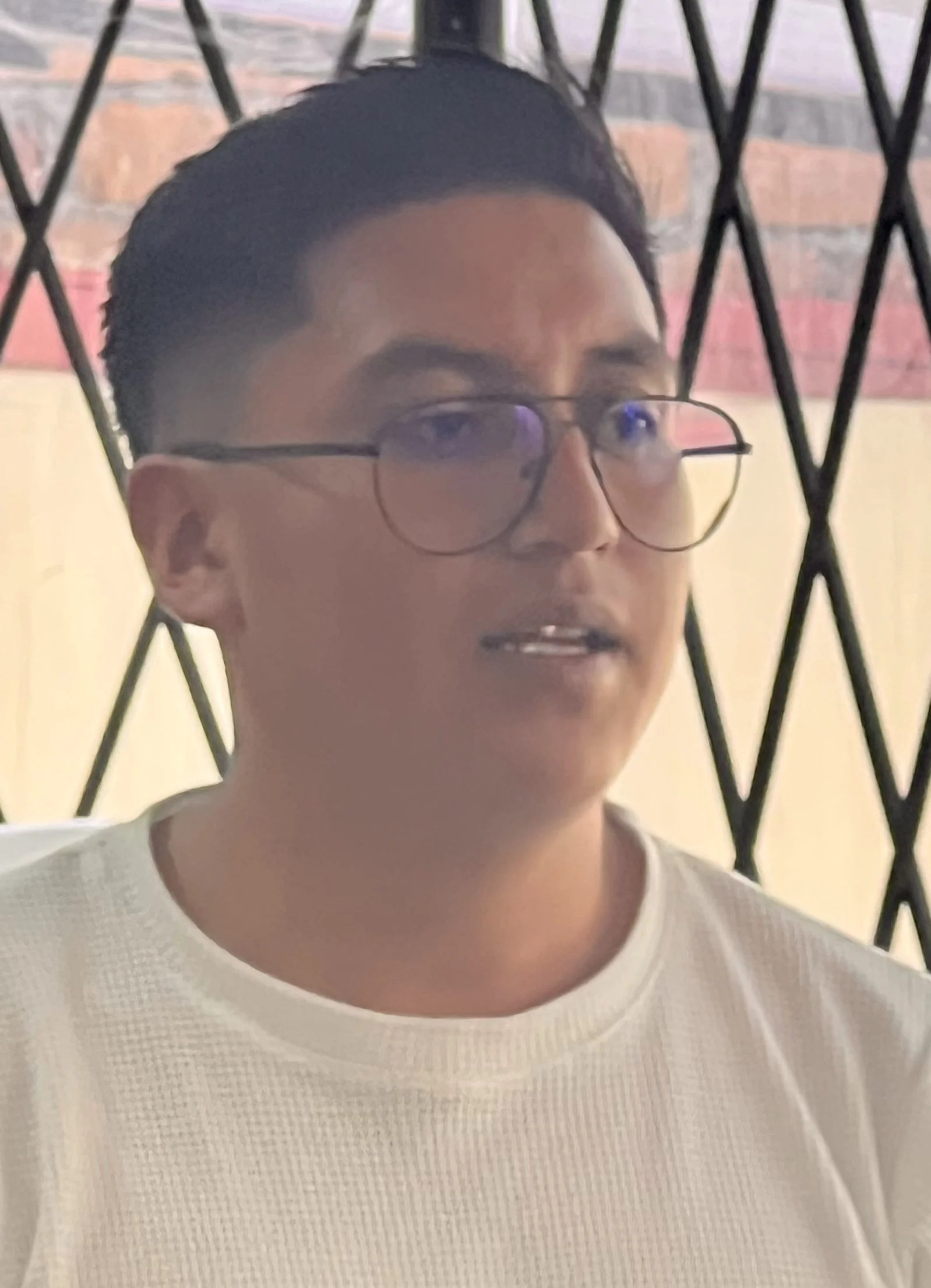
Jhonny
Jhonny will graduate this year with an Environmental Engineering degree.
Jhonny reported that attending school helps him develop skills to contribute to his country and community. His Environmental Engineering degree trains him to manage air, soil, natural resources, and water to meet community and regional needs. Over the past 3 years of study, one of his main goals has been to help solve the persistent, time-consuming problem of hauling water up the mountain for drinking and irrigation. The cropland is arid, and dry winds in these mountain villages blow away the topsoil. Consistent irrigation is required, and his thesis project is to design a small reservoir for a single community; he anticipates implementation will be challenging. His training and project experience in assessment, collaboration (with community members and agencies), and engineering may help him make this dream come true. Hearing how passionate he is, I think he will succeed! Jhonny hopes to earn a master’s degree in the future. He emphasized that without FFGE scholarship support, he would not be in university or be able to envision such solutions for his community.
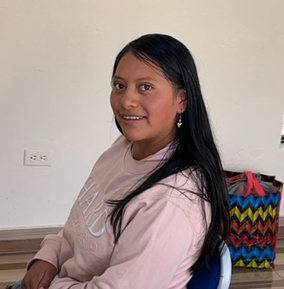
Katherine
Katherine will graduate next year with a degree in Tourism.
Katherine reported that her family is very poor. She is the youngest of 5 siblings and the first to attend college. Both of her parents work in the fields and tend sheep. They support her financially as they are able, and she also works part-time. To graduate, Katherine, a tourism major, must be proficient in both English and French, in addition to her native Kichwa and Spanish. She will be expected to develop tourism projects and advertising in all these languages. She had fun practicing her English with us! She said she has learned a lot about the different geographies and cultures in her country – the beaches, jungles, other mountain communities, and the Galapagos. As a graduation requirement, she must complete several internships across Ecuador to better understand the development of tourism nationwide. These internships create an additional financial burden for her, but they are an exciting aspect of her studies.
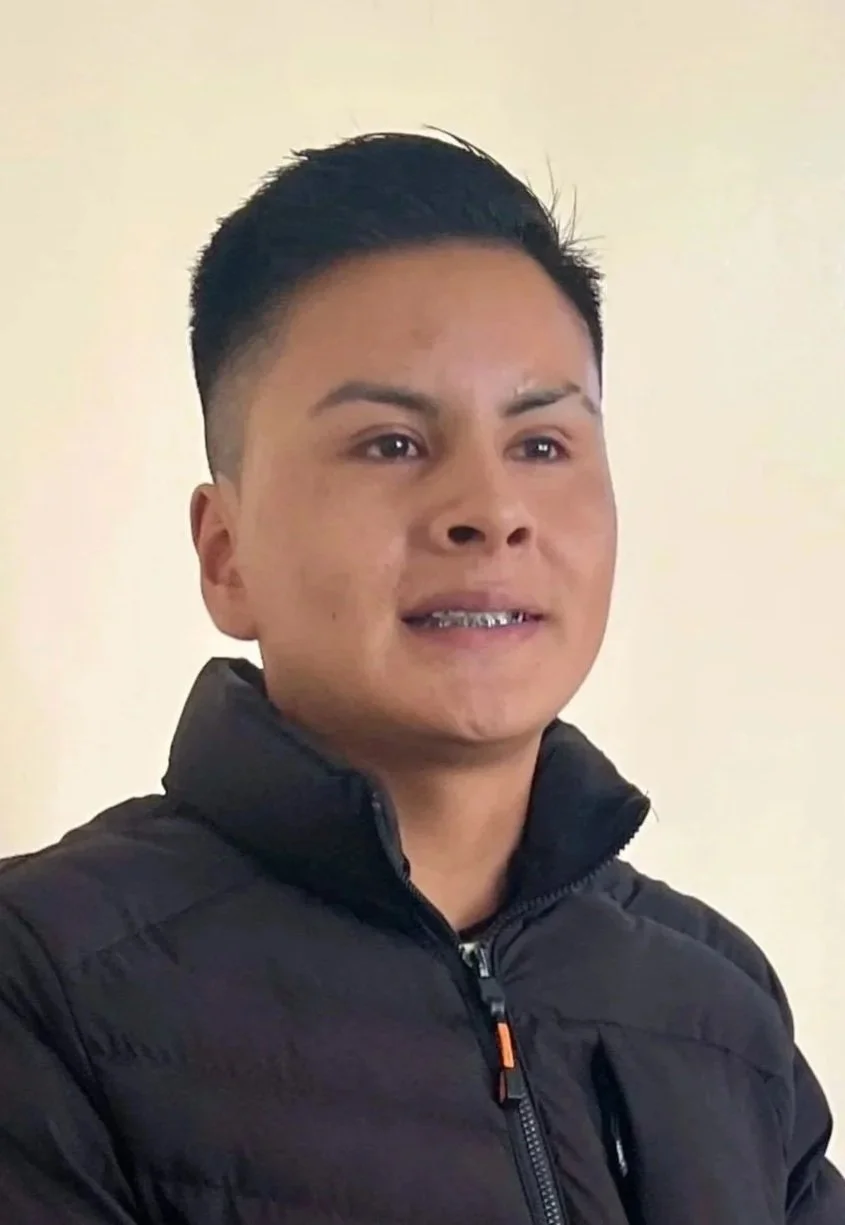
Brayan
Brayan will graduate next year with a degree in Tourism.
Brayan is also from a poor, subsistence-farming family and is the oldest of five children. He is also majoring in tourism. He, too, must learn about cultures and communities, and how to work with them to develop tourism programs. He must also be proficient in English and French, in addition to his indigenous language, Kichwa, and Spanish. As part of his advanced studies, he is required to develop a thesis describing a community project to enhance tourism. For example, he wants to help communities identify their unique dishes and crafts and develop these specialties into ecotourism businesses. As he said, “they have many things to offer, but do not know how to turn these unique attributes into economy-supporting tourism businesses. I want to help them do this!” He spoke with a lot of passion! Brayan also described in detail how participation in this scholarship program, mentoring and accountability from Mr. Ilaquiche, and communal dorm life have fostered a sense of community that supports his success. He is the first in his family to attend college, and his parents, while very supportive, do not have the experience or skills to guide him through university.
Summary
Our visit to Ecuador and our observation of the FFGE scholarship program were a unique opportunity to better understand how supporting these students' success at university can help them change their futures and those of their regions. We sensed great hope and enthusiasm in the room. Clearly, the scholarship, combined with the mentoring/residential program, is working! We also learned about additional support needed. Our goal is to expand the number of scholarships for indigenous and vulnerable students, as demand is strong. In addition, we learned of the need for a separate supplemental fund to address the additional financial demands students face in meeting study requirements (e.g., travel for practicum experiences or to complete thesis requirements). This will enable them to optimize their educational experience and graduate on time. Stay tuned for more details about this opportunity.